DesignTo Clothing / Sample development
Your first clothing sample turns a design into a garment you can hold, measure, and try on. It also helps you decide what needs to change before you commit to production.
For a new brand, the first quote often raises a question: why does one sample cost several hundred dollars when the estimated bulk price is much lower? The answer is the development behind that first piece, from fit and material selection to construction and decoration.
This guide explains custom clothing sample costs, what to compare in a quote, and how to use your sample to make clearer production decisions.
01 / Plan your first sample
How much does a custom clothing sample cost?
The garment category provides a starting point, but the details determine the work. A straightforward T-shirt and a T-shirt with multiple panels, specialty trims, and several decorated areas may require different development budgets.
These illustrative DesignTo estimates can help you plan. Your written quote confirms the actual price and included work for your design.
| Custom sample type | Planning estimate |
|---|---|
| T-shirt | $350–$400 |
| Hoodie or sweatshirt | $450–$600 |
| Hat | $350–$450 |
| Shorts or leggings | $450–$600 |
| Varsity jacket | $900–$1,200+ |
These are planning estimates, not fixed prices or quotes for the photographed samples. Special materials, custom branding, additional development, and delivery requirements can affect the total.
Sample development is one part of a launch budget. Our guide to the cost of starting a clothing brand covers the wider picture.
Why does a sample cost more than a bulk garment?
A sample may require design review, fabric sourcing, pattern work, artwork preparation, cutting, sewing, decoration, and checking the finished piece. Much of that setup is needed even when only one garment is being made.
Bulk production repeats an agreed design. Setup can be spread across more units, and the team works from established specifications. The sample fee reflects developing the piece; the bulk unit price reflects producing it at a particular quantity.
Compare the sample fee and production price separately.
A $450 sample does not mean the production garment will cost $450 per unit. Ask for a separate bulk estimate based on your intended quantity, then confirm the final price once the specifications are settled.
What affects clothing sample pricing?
Fit and pattern development
A new silhouette can require more development than adapting an existing fit. A reference garment, key measurements, and notes about proportions help communicate the result you want.
Fabric and availability
Weight, composition, stretch, texture, and availability influence sourcing. Stock fabrics may suit small orders, while custom fabric development can introduce additional costs and minimum quantities.
Construction and components
Lining, extra panels, pockets, specialty closures, and custom hardware add work. Identify these details before confirming the sample scope so the quote reflects the intended garment.
Artwork and decoration
Size, placement, coverage, and the number of decorated areas matter. Fine lines, layered details, and designs near seams can require closer review during development.
The development route matters too. Customizing an existing style and developing a new garment can involve different amounts of work. Our private label versus cut-and-sew guide explains the distinction.
02 / Understand your quote
What should a clothing sample quote include?
Compare the scope as carefully as the price. Two quotes may cover different materials, decoration, sample quantities, or revision arrangements. Confirm that you are comparing the same version of the garment.
| Item | What to confirm |
|---|---|
| Sample scope | Garment style, sample size, quantity, and the design version being developed. |
| Materials and details | Fabric requirements, artwork, placement, construction, and special components. |
| Branding | Whether labels, hangtags, patches, and packaging are included or quoted separately. |
| Revisions | The feedback process and any additional fee for further development or another physical sample. |
| Delivery and credits | Shipping arrangements, estimated timing, and any credit toward the corresponding bulk order. |
Custom labels and hangtags are not automatically included in every DesignTo sample. You can discuss adding them during sampling or confirm the garment first and introduce those components during bulk production.
03 / From our sample work
Four real examples of details worth sampling
A garment photograph shows why sample development goes beyond choosing a size and color. These DesignTo sample examples illustrate how artwork, separate components, and decorative finishes create different checkpoints before production.
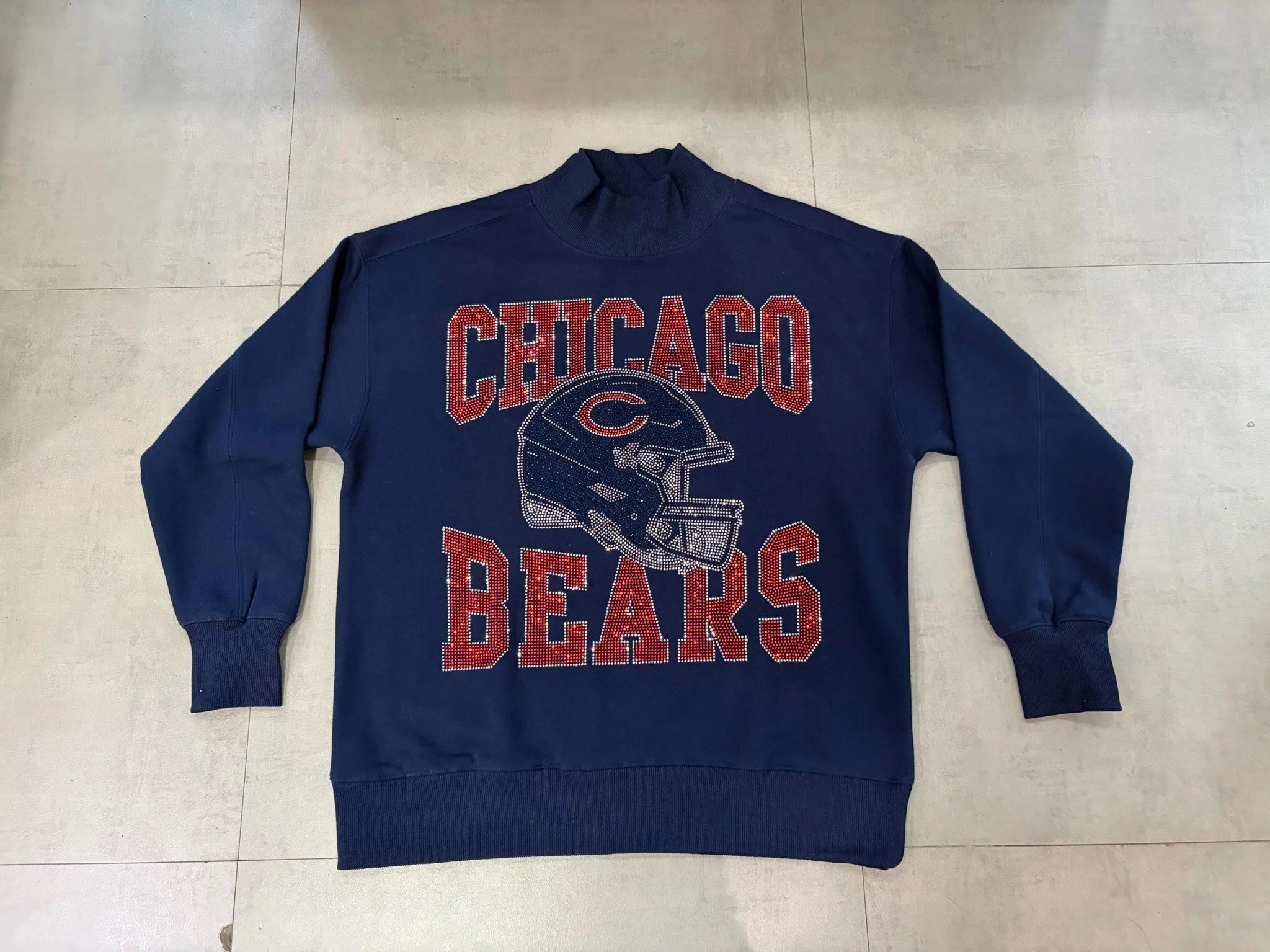
Sweatshirt / Artwork scale
A large front graphic
This navy mock-neck sweatshirt combines prominent lettering, a helmet graphic, and small reflective details. A sample helps check the artwork's scale and chest placement alongside the collar and body proportions. The amount and complexity of decoration can affect development work.
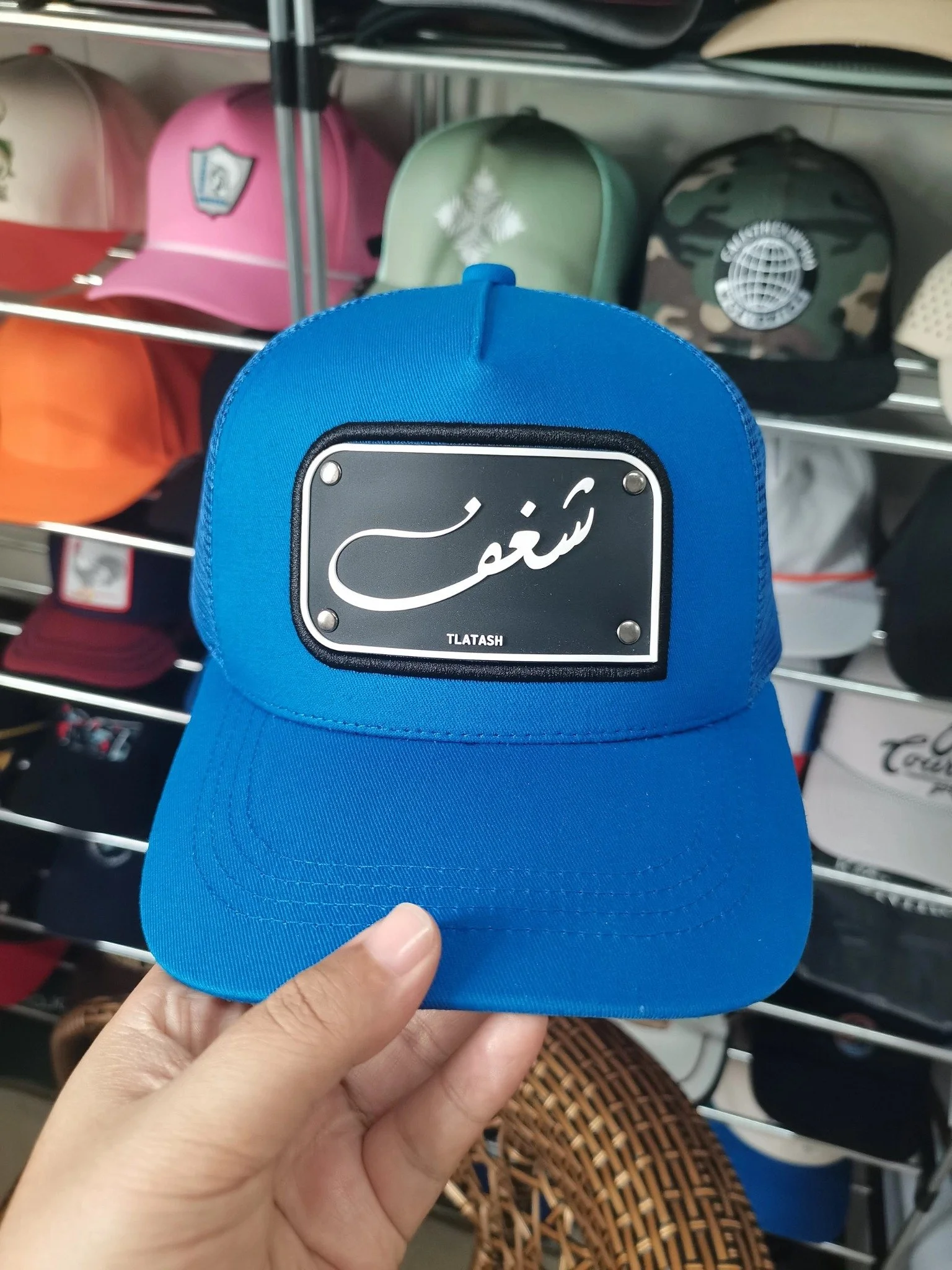
Cap / Components and placement
A structured front badge
The blue cap has a rectangular black badge with white lettering and silver-tone studs. Sampling helps review its size, position, attachment, and how it sits against the curved crown. Added components bring their own sourcing and assembly requirements.
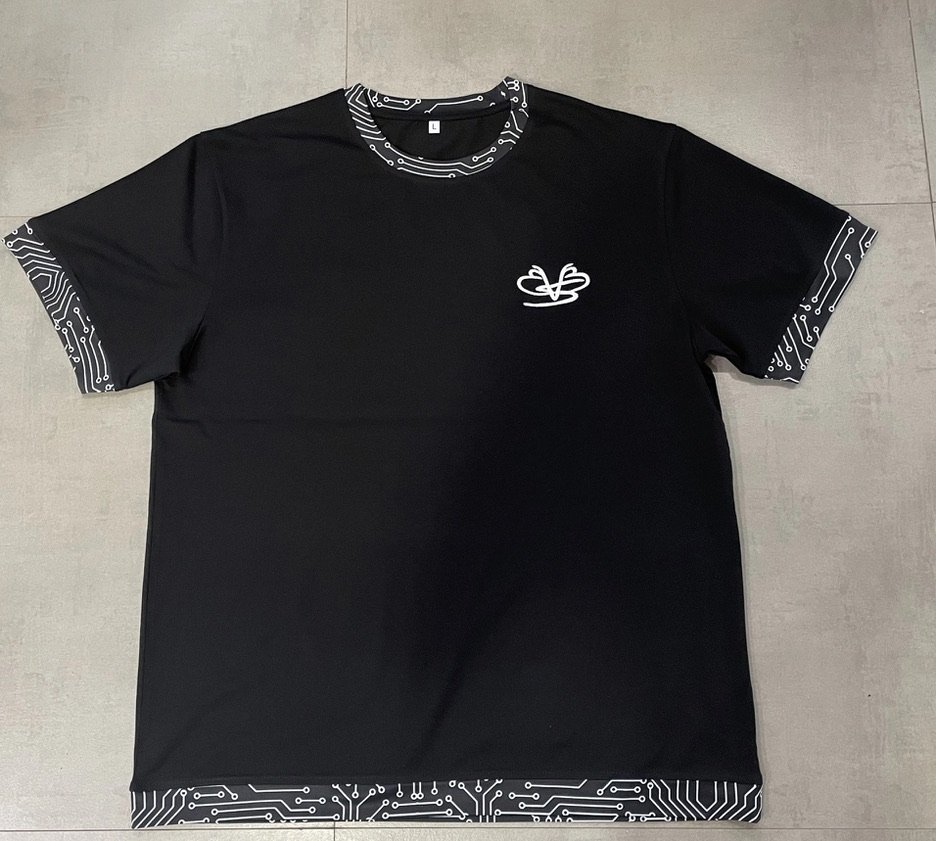
T-shirt / Multiple decorated areas
Circuit-style details around the edges
White circuit-style details run around the neckline, sleeve ends, and hem, with a small chest graphic. A sample lets you review fine-line clarity, the width of each patterned area, and placement near garment edges. Several decorated areas can require more setup than a single front graphic.
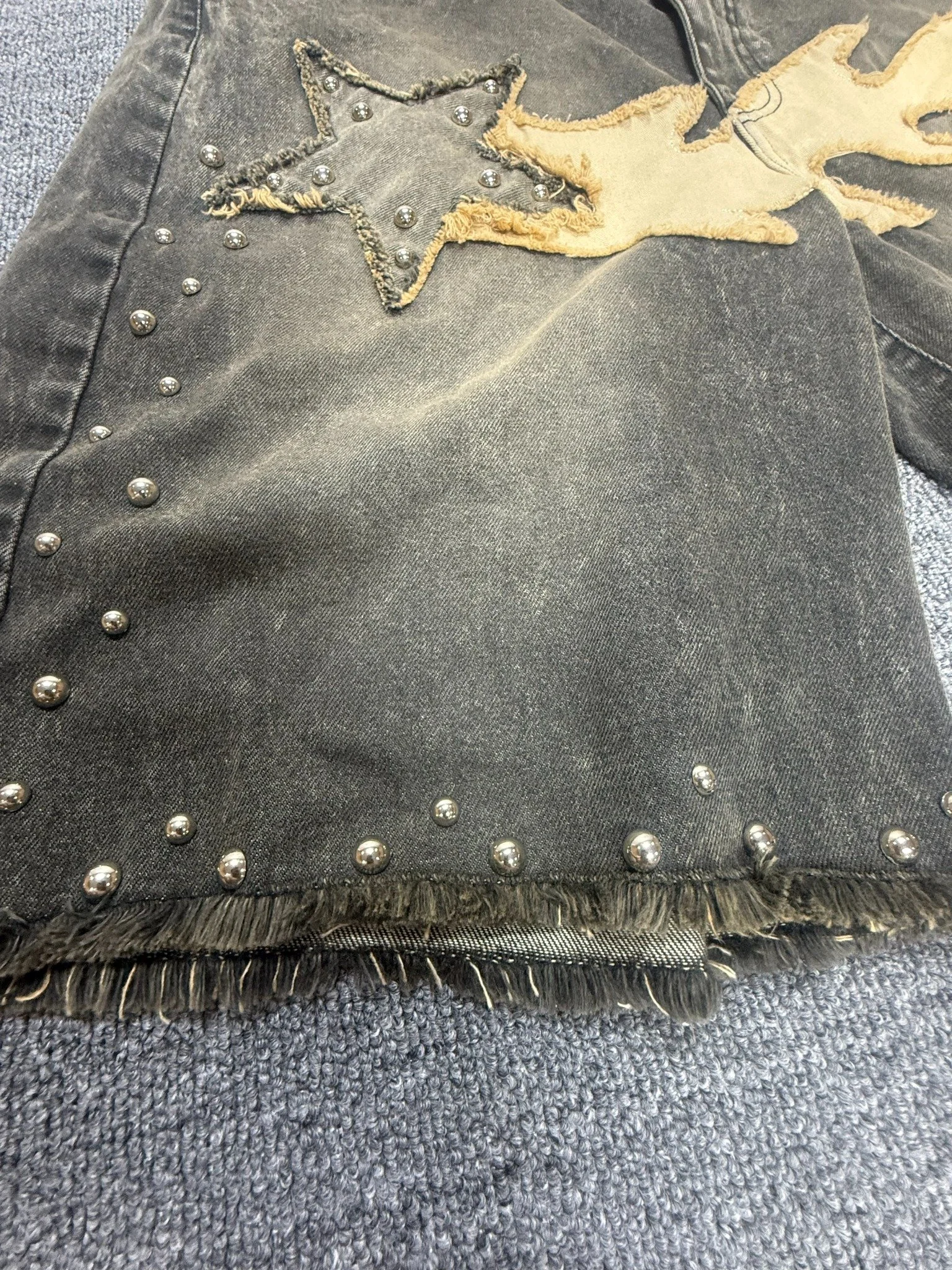
Denim / Texture and finishing
Layered fabric details and studs
This denim detail combines star-shaped appliqué, tan fabric shapes, raw edges, and silver-tone studs. A physical sample helps you inspect attachment, spacing, texture, and feel. Multiple components and decorative finishes can add sourcing and assembly work.
The photos illustrate features to review. Material specifications, production methods, and pricing are confirmed separately for each project.
04 / From idea to approval
How does the clothing sample process work?
- Share your design and priorities. Send sketches, mockups, photos, or a reference garment. Include the intended fit, sample size, colors, decoration, and planned production quantity. Explain which features are essential and where you are open to suggestions.
- Confirm the development scope. Review the proposed materials, key measurements, construction, artwork, fee, and estimated timing. Resolve major design choices before development starts.
- Develop the sample. Sourcing and construction follow the agreed requirements. Many sample projects take about 3–4 weeks to make after details are confirmed. Shipping transit time is additional, and complex sourcing or additional development can extend the schedule.
- Review and consolidate your feedback. Compare the sample with the agreed requirements. Send one clear list of comments supported by measurements and marked photos. Further work and any additional physical sample are confirmed before proceeding.
You do not need a finished tech pack to begin a discussion with DesignTo. Clear references and specific notes provide a useful starting point. Read whether you need a tech pack to start a clothing brand for guidance on what to prepare.
05 / Before you approve
What should you check when your sample arrives?
A useful review checks the physical garment against the agreed requirements. Look beyond its resemblance to the mockup.
- Fit and measurements: Check the sample size, body length, width, sleeve or leg proportions, and movement on the intended wearer.
- Fabric behavior: Assess feel, drape, stretch, and opacity against the confirmed requirements. Follow the agreed care instructions for any washing evaluation.
- Construction: Examine seams, hems, pockets, closures, lining, and how the garment sits.
- Decoration: Review artwork dimensions, placement, and finish against the approved files and notes.
- Color and branding: Use agreed physical references where available. Screen images alone are not a reliable basis for an exact color comparison. Check any labels or trims included in the sample.
Make changes measurable. “Shorten the body by 1 inch” communicates more than “make it a little shorter.” Separate corrections to the agreed requirements from new design requests so the next step, cost, and timing can be confirmed clearly.
How do sample approval and bulk credits work?
Before bulk production begins, confirm the final design and any agreed changes in writing. Check materials, the size chart, artwork placement, branding, quantities by size and color, pricing, and the estimated schedule.
Minimum quantities vary by garment and requirements. They are generally considered by style and color, so adding colorways can change the total order you need. Our guide to clothing manufacturing MOQs explains how to plan the first run.
A sample credit applies to the corresponding bulk order.
Some DesignTo sample quotes include a partial bulk credit. For example, if your written quote specifies a $450 sample fee and a $150 credit, the eligible corresponding bulk order receives that $150 credit. It is not a cash refund; the amount and conditions are confirmed in your quote.
Allow time for sampling, feedback, any additional development, bulk production, and shipping when planning your launch. These are separate stages.
Clothing sample questions
Do I need a physical sample before ordering bulk?
Not always. For suitable projects, DesignTo can arrange preproduction sample photos for approval as part of the bulk order. A separately shipped physical sample is optional. It is especially useful when fit, fabric feel, or detailed construction needs to be evaluated in person.
Will one sample show how every size fits?
A sample demonstrates the size in which it was made. It does not physically demonstrate the full size range. Confirm the production size chart and discuss whether additional size samples are appropriate for your project.
Can I change the design after seeing the sample?
You can submit a consolidated list of requested changes. New design details, different materials, or another physical sample may require additional development time and payment. The next step depends on the agreed scope.
Can I get a bulk price before ordering a sample?
An initial estimate may be possible once the design and intended quantity are clear. Final pricing depends on the confirmed specifications. Changes to materials, construction, decoration, branding, or quantity can affect the production price.
How can I keep sample development costs manageable?
Start with one clearly defined style, provide consistent references, and settle major design decisions before development begins. Ask which available fabrics and trims suit your intended production quantity. Focus the sample on the features you need to evaluate before committing to bulk.
Start with your first piece
Ready to develop your clothing sample?
Send your design or reference images, the garment type, and your planned quantity. We will review the requirements and provide a project-specific quote for the next step.
Request a Quote →